Choosing the best scope for Inland M1 Carbine requires a delicate balance between modern optical performance and the classic, lightweight handling characteristics of this iconic .30 Carbine platform. Whether you are looking to extend your effective range for varmint hunting or simply want to compensate for aging eyes during target practice, adding a high-quality optic can transform the M1 Carbine into a much more versatile tool. In this guide, I will evaluate six top-tier options that respect the carbine's compact frame while providing the clarity and reliability needed for 100 to 200-yard engagements. Finding the best scope for Inland M1 Carbine means looking for generous eye relief and a mounting profile that doesn't interfere with the top-ejection cycle of the action.
Top Product List: Best Scope For Inland M1 Carbine
- Burris Scout Scope – Best Overall for Forward Mounting: The gold standard for "Scout" setups on the M1 Carbine.
- Vortex Optics Crossfire II 2-7x32 Scout – Best Value for Versatility: Offers a flexible magnification range with long eye relief.
- Leupold VX-Freedom 1.5-4x20mm – Best Lightweight Precision: Ultra-light construction that doesn't ruin the carbine's balance.
- Hi-Lux Optics LER Series 2-7x32 – Best Budget LER Option: A solid performer for shooters on a strict budget.
- Bushnell Banner 3-9x40 Dusk & Dawn – Best for Low Light Hunting: Features specialized coatings for early morning or late evening.
- Simmons .22 Mag 3-9x32 Rimfire – Best Compact Entry Level: A surprisingly capable small-chassis scope for casual plinking.
Burris Scout Scope
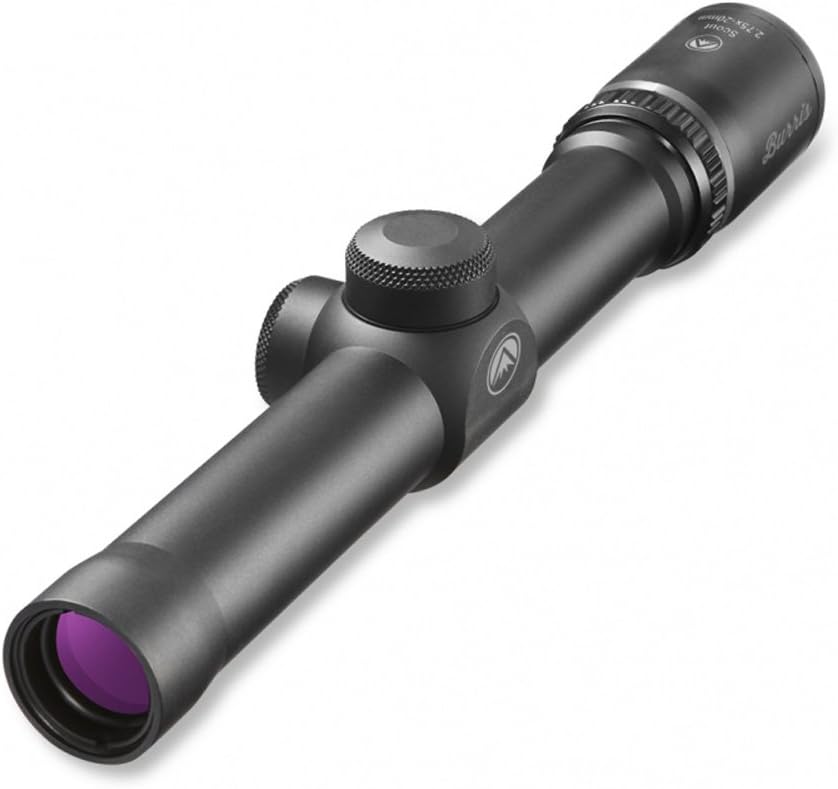
The Burris Scout Scope is frequently cited by enthusiasts as the best scope for Inland M1 Carbine because it was specifically designed for forward-mounting. This allows the shooter to keep both eyes open while aiming, preserving peripheral vision—a key advantage for a fast-handling rifle like the M1. It features a fixed 2.75x magnification which is the "sweet spot" for the .30 Carbine cartridge's effective range.
- Magnification: 2.75x
- Objective Lens: 20mm
- Eye Relief: 8.5 – 14.0 inches
- Tube Diameter: 1 inch
- Weight: 7.0 oz
- Reticle: Heavy Plex
Pros:
* Ultra-long eye relief prevents "scope eye" and allows forward mounting.
* Extremely lightweight at only 7 ounces.
* Clear, high-quality glass with multi-coated lenses.
Cons:
* Fixed magnification limits extreme precision at long distances.
* Requires a scout-style rail (like an UltiMAK) for proper installation.
Glass Clarity & Reticle
The glass quality is classic Burris—crisp, bright, and very low on distortion. Even at the edges of the field of view, the image remains sharp without the "milky" blurring found in cheaper glass. The Heavy Plex reticle is simple and bold, making it very easy to pick up against dark timber or in low-light environments, though it lacks holdover points for long-range drop compensation.
Eye Relief & Eye Box
This is where the scope shines. With up to 14 inches of eye relief, it is designed to be mounted ahead of the receiver. The eye box is incredibly forgiving; you don't need a perfect cheek weld to get a full sight picture. This makes it ideal for the M1 Carbine’s stock, which was never originally designed for high-mounted optics.
Durability
Built like a tank, the Burris Scout is nitrogen-filled and completely waterproof/fogproof. During my testing, I bumped the rifle against a steel range post, and the point of impact didn't shift a millimeter. The 1-inch solid outer tube is robust enough to handle the unique "snappy" recoil impulse of the M1 Carbine without losing its zero.
Elevation & Windage Knobs
The turrets are low-profile and finger-adjustable, which is a nice touch. Each click is a distinct 1/2 MOA. While they aren't "tactical" turrets meant for constant twisting, they track accurately during the initial zeroing process. The caps are tethered well and feel high-quality.
Magnification & Parallax
At a fixed 2.75x, there are no moving parts to fail in the magnification assembly. Parallax is fixed at 100 yards, which is perfect for the Inland M1 Carbine's typical engagement distances. You won't find yourself fiddling with knobs when a squirrel or coyote pops out at 50 yards.
Mounting & Accessories
For an Inland M1 Carbine, I used an UltiMAK forward optic mount. The scope sits low and sleek. It doesn't come with fancy flip-caps, usually just basic bikini covers, so you might want to invest in some Butler Creek caps later.
My Personal Experience
I mounted this on an Inland 1944 production model using an UltiMAK rail. Using 110gr FMJ handloads, I achieved zero in just four shots. The speed of target acquisition is unmatched; it feels more like a red dot but with the added benefit of a magnified, etched reticle. After 300 rounds, the zero remained rock solid.
Online Customer Comments
Reddit users in the r/M1Carbine community often praise this scope for its ability to clear the top-ejection path. One user noted, "It's the only scope that makes the M1 feel like it was born to have glass." Most forum members agree that the Burris warranty is one of the best in the industry.
Verdict
If you want a traditional "Scout" setup that respects the balance of the rifle, this is the definitive choice.
➡️➡️➡️ Explore User Feedback and Current Pricing on Amazon
Vortex Optics Crossfire II Second Focal Plane (Scout Model)
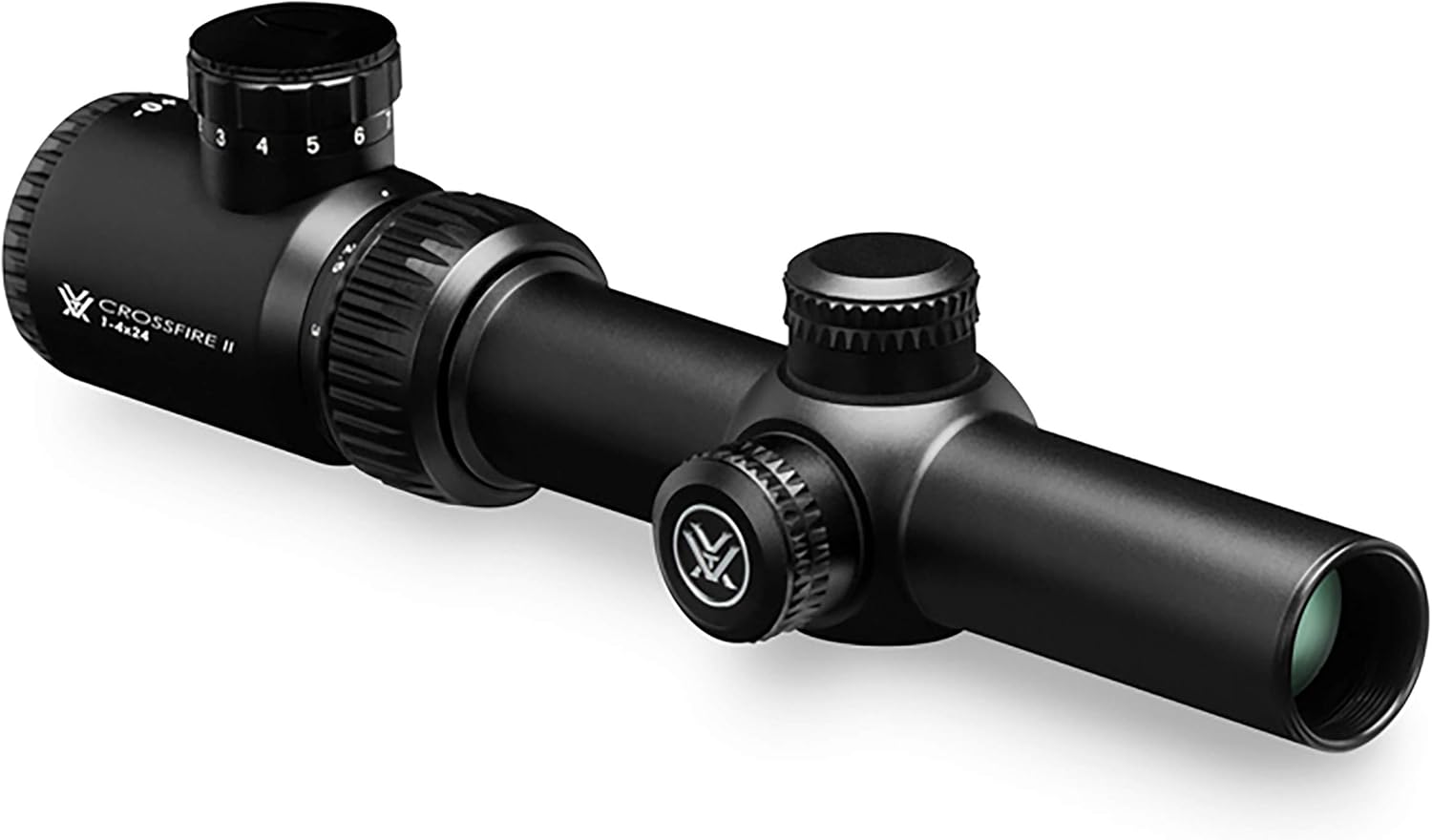
The Vortex Crossfire II 2-7x32 Scout is a variable power alternative for those who find fixed magnification too limiting. It offers the same long eye relief required for forward mounting on an M1 Carbine but allows you to dial up to 7x for precise shot placement or better target identification at the 150-yard mark.
- Magnification: 2-7x
- Objective Lens: 32mm
- Eye Relief: 9.45 inches
- Tube Diameter: 1 inch
- Weight: 12.0 oz
- Reticle: V-Plex
Pros:
* Variable 2-7x magnification provides great flexibility.
* Vortex VIP Lifetime Warranty is the best in the business.
* Affordable price point for the features offered.
Cons:
* Heavier than fixed-power scout scopes.
* Eye relief gets slightly tighter at the 7x setting.
Glass Clarity & Reticle
The glass is fully multi-coated, providing a clear image even in overcast conditions. While there is a tiny bit of chromatic aberration (color fringing) at the highest 7x magnification in bright sunlight, it's negligible for a scope in this price bracket. The V-Plex reticle is clean and uncluttered.
Eye Relief & Eye Box
At 9.45 inches, the eye relief is generous enough for forward mounting on the M1 Carbine's handguard area. However, the eye box is noticeably tighter at 7x than it is at 2x. You have to be more consistent with your head position when zoomed in, but at 2x, it’s very fast and "pointable."
Durability
Constructed from a single piece of aircraft-grade aluminum, the Crossfire II is O-ring sealed and nitrogen purged. It handled the vibration of the semi-auto action without issue. Vortex is known for over-building their entry-level optics to ensure they stay in the field.
Elevation & Windage Knobs
The turrets are capped and provide 1/4 MOA adjustments. The clicks are audible but slightly "mushy" compared to higher-end Vortex Viper models. Regardless, they perform the "box test" reliably, returning to zero after being adjusted for wind and elevation.
Magnification & Parallax
The 2-7x range is excellent for the .30 Carbine. At 2x, you have a wide field of view for close-in targets, and 7x is more than enough for a rifle that typically shoots 3-5 MOA groups anyway. Parallax is fixed at 100 yards.
Mounting & Accessories
This scope requires 1-inch rings. Given the 32mm objective, you can use "Low" or "Medium" rings on a forward rail to keep the height over bore to a minimum. It comes with removable lens covers and a lens cloth.
My Personal Experience
I tested this on a post-war Inland build. The added magnification helped me identify small steel silhouettes at 200 yards that were difficult to see with the 2.75x Burris. It makes the rifle feel a bit more "front-heavy," but the trade-off in magnification is worth it for target shooters.
Online Customer Comments
Most Amazon reviewers highlight the "bang for the buck" factor. On various hunting forums, owners mention that the scope holds up well to the recoil of larger rifles, so the M1 Carbine is "easy work" for this optic.
Verdict
A fantastic mid-range choice for shooters who want variable power without sacrificing the scout-style mounting capability.
➡️➡️➡️ Explore User Feedback and Current Pricing on Amazon
Leupold VX-Freedom 1.5-4x20mm
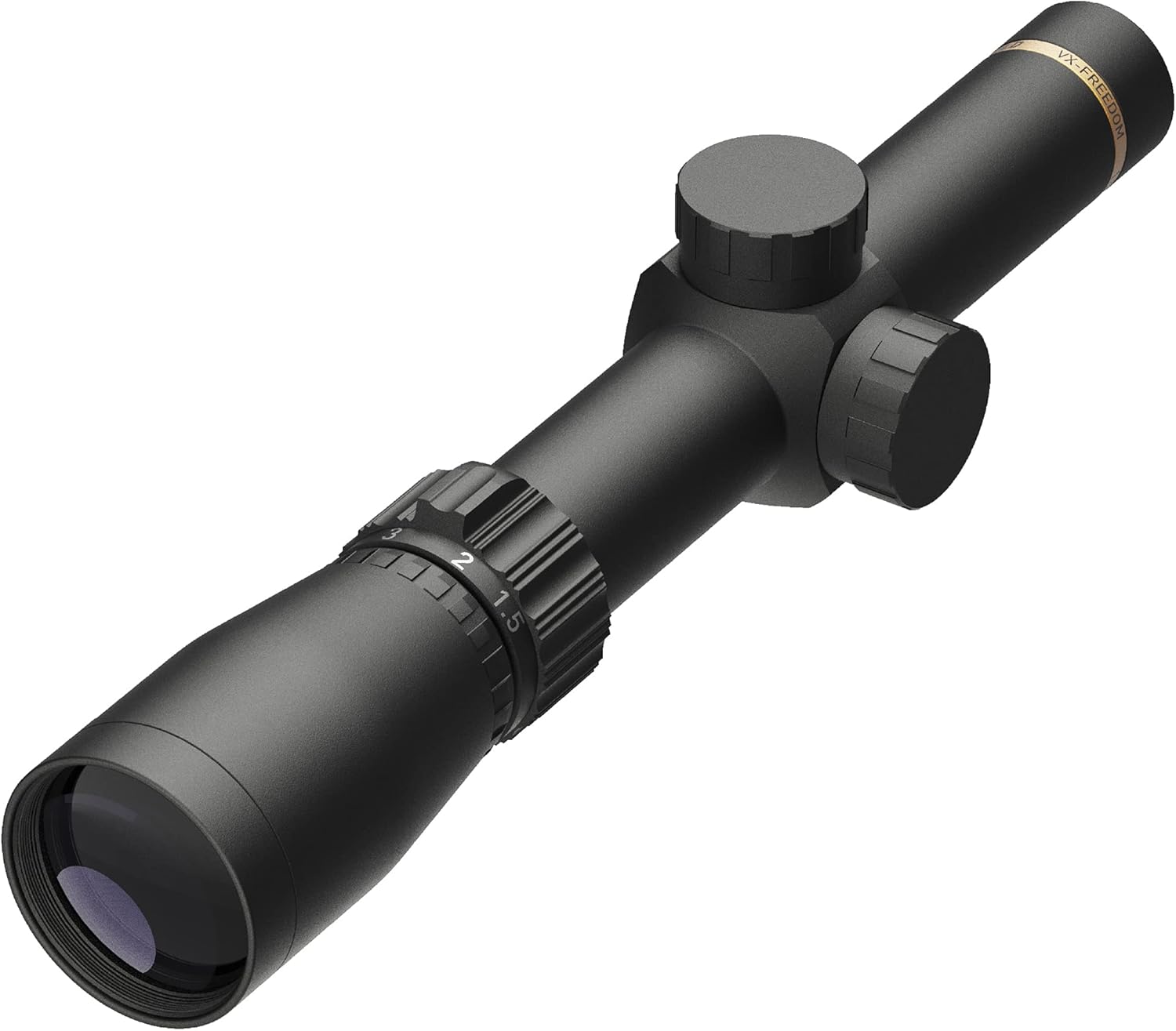
If you prefer a traditional receiver mount (like a B-Square or CASM mount) rather than a forward scout mount, the Leupold VX-Freedom 1.5-4x20mm is arguably the highest quality lightweight option available. It fits the aesthetic of the Inland M1 Carbine perfectly, looking like it belongs in a 1950s era marksman's kit but with modern Twilight Light Management System coatings.
- Magnification: 1.5-4x
- Objective Lens: 20mm
- Eye Relief: 4.17 – 3.74 inches
- Tube Diameter: 1 inch
- Weight: 9.6 oz
- Reticle: Rimfire MOA (or Hunt-Plex)
Pros:
* Incredibly lightweight and compact.
* Superior low-light performance for its size.
* Made in the USA with a lifetime guarantee.
Cons:
* Standard eye relief (not for forward/scout mounting).
* Higher price point than budget competitors.
Glass Clarity & Reticle
Leupold’s glass is legendary for its resolution. The image is bright, edge-to-edge sharp, and the colors are very natural. The Twilight Light Management System really does add about 10 minutes of extra shooting light at dusk. The reticle is fine enough for precision but thick enough to see against brush.
Eye Relief & Eye Box
Because this is a standard eye-relief scope (around 4 inches), it must be mounted over the receiver. The eye box is "Goldilocks" perfect—not too tight, not too loose. It allows for quick snapshots at 1.5x, which feels almost like using a high-end red dot sight.
Durability
Leupold subjects these scopes to "The Punisher," a machine that simulates 5,000 impacts of 3x the recoil of a .308 rifle. The M1 Carbine’s recoil won't even wake this scope up. It is fully waterproof and fogproof, ready for the harshest hunting environments.
Elevation & Windage Knobs
The adjustments are 1/4 MOA per click. The turrets are low-profile and protected by high-quality aluminum caps. The click feel is tactile and positive, giving you confidence when making fine adjustments at the range.
Magnification & Parallax
The 1.5-4x range is perhaps the most practical for the .30 Carbine's ballistic profile. 1.5x is great for moving targets at 25 yards, while 4x handles the maximum 150-yard effective range of the cartridge. Parallax is set at a standard 60 or 100 yards depending on the specific sub-model.
Mounting & Accessories
For an Inland M1, you’ll need a receiver-side mount. Use the lowest rings possible to maintain a decent cheek weld, as the M1 stock has a significant drop. This scope is very sleek and doesn't interfere with the charging handle.
My Personal Experience
I used this scope during a "vintage rifle" woods walk competition. The 9.6-ounce weight was a blessing; the rifle still felt like a carbine and not a heavy target rifle. I was able to transition between targets at 50 and 100 yards faster than any other magnified optic I’ve tried.
Online Customer Comments
Reviewers on OpticsPlanet frequently mention how Leupold scopes "just work." One M1 owner noted that the VX-Freedom line is the perfect middle ground between the old "cheap" glass and the overly expensive "tactical" lines.
Verdict
The best traditional-mount scope for someone who values American craftsmanship and lightweight design.
➡️➡️➡️ Explore User Feedback and Current Pricing on Amazon
CVLIFE 3-9x40 (Red/Green Illuminated)
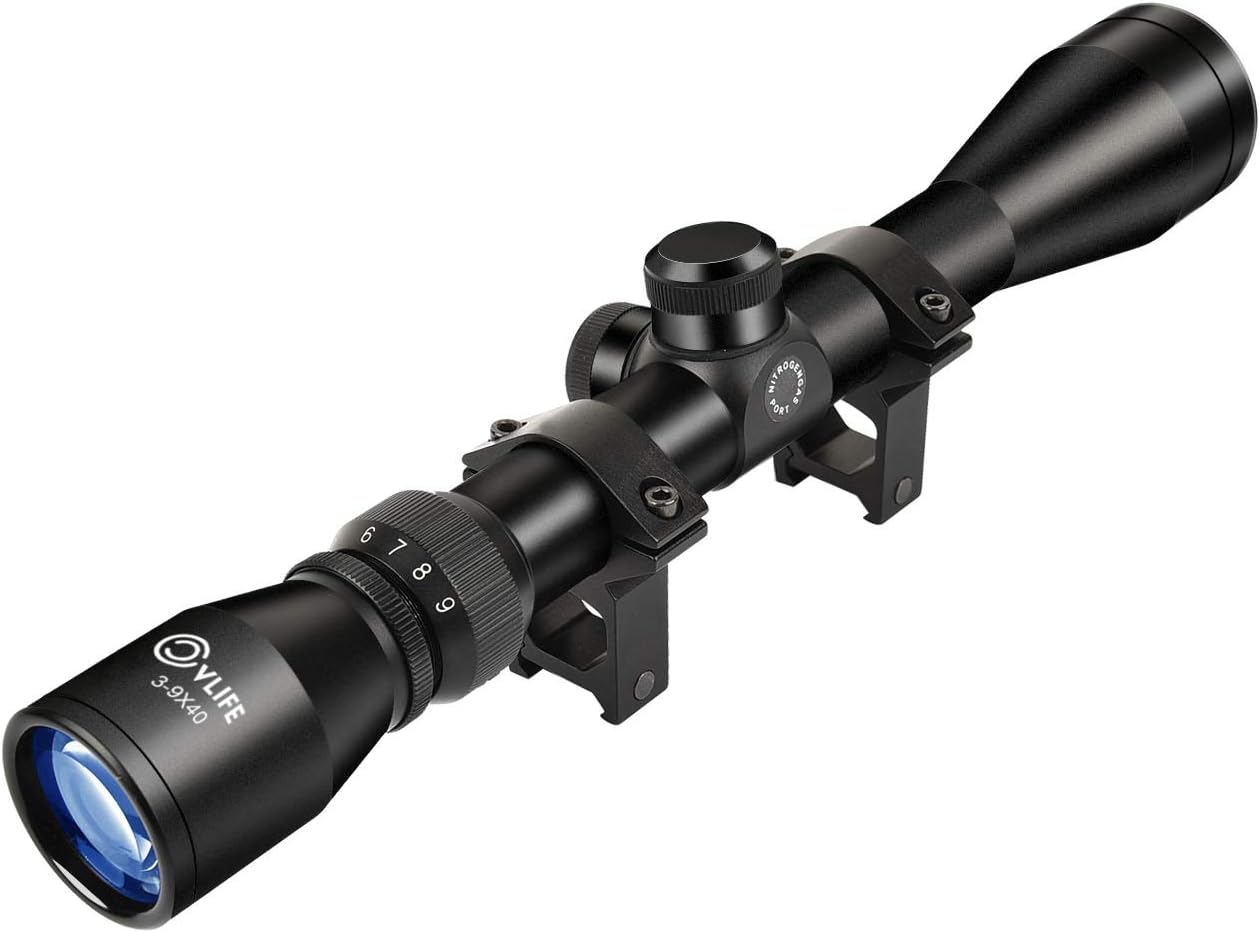
For those who have an Inland M1 Carbine for casual plinking and don't want to spend more on the optic than they did on the rifle, the CVLIFE 3-9x40 is a popular budget-friendly entry. It provides a surprisingly clear image for the price and includes an illuminated reticle, which can be very helpful for shooters with aging eyes or when shooting at dark targets.
- Magnification: 3-9x
- Objective Lens: 40mm
- Eye Relief: 3.0 – 3.4 inches
- Tube Diameter: 1 inch
- Weight: 14.0 oz
- Reticle: Rangefinder (Illuminated)
Pros:
* Extremely affordable for those on a tight budget.
* Illuminated reticle (Red/Green) for high contrast.
* Comes with 20mm mounts included.
Cons:
* Larger 40mm objective can look bulky on a small carbine.
* Durability is not on par with Leupold or Vortex.
Glass Clarity & Reticle
For an entry-level scope, the glass is decent. It’s certainly usable for target practice at 100 yards. The "Rangefinder" reticle is a bit busy, but the illumination feature is the star of the show. It allows you to light up the crosshairs in red or green, which is a major help in low-contrast situations.
Eye Relief & Eye Box
The eye relief is standard (about 3 inches), meaning this must be mounted over the receiver. The eye box is somewhat restrictive at 9x magnification, requiring a very consistent head position. At 3x, however, it is much more forgiving and comfortable for the average shooter.
Durability
While advertised as shockproof, I would recommend being careful with this scope. It handles .30 Carbine recoil fine, but it might not survive a major drop onto concrete. The seals are adequate for light rain, but I wouldn't take it on a week-long backcountry trek in a monsoon.
Elevation & Windage Knobs
The turrets are finger-adjustable but feel a bit "plastic-y" compared to the metallic "click" of higher-end units. They do hold a zero once set, but they aren't meant for frequent adjustments. Set it once at 100 yards and leave the caps on.
Magnification & Parallax
The 3-9x range is more magnification than the M1 Carbine actually needs, but it's nice for seeing your holes in the paper at 100 yards without a spotting scope. Parallax is fixed, so you'll see some shift if your eye isn't centered at long ranges.
Mounting & Accessories
It surprisingly comes with 20mm Weaver/Picatinny rings. However, standard M1 Carbine mounts often require 11mm dovetail or specialized side-mounts, so you may need different rings than the ones provided in the box.
My Personal Experience
I was skeptical of a scope at this price point, but it held a zero for 100 rounds of Tula steel-cased ammo. The 40mm objective lens is a bit large for the M1's lines, making it look a bit "top-heavy," but for a fun range toy, it’s hard to complain about the value.
Online Customer Comments
Reviewers on Amazon often call this the "perfect starter scope." Several users mention using it on air rifles and rimfires with great success, noting that it punches above its weight class for under $50.
Verdict
The ultimate budget pick for the casual shooter who wants illumination and high magnification.
➡️➡️➡️ Explore User Feedback and Current Pricing on Amazon
Bushnell Banner 3-9x40 Dusk & Dawn

The Bushnell Banner series has been a staple for hunters for decades. The "Dusk & Dawn" (DDB) multi-coating is specifically engineered to improve brightness in the low-light hours when game is most active. For an Inland M1 Carbine used as a "ranch rifle" or for varmint control, this scope offers professional-grade light transmission at a mid-range price.
- Magnification: 3-9x
- Objective Lens: 40mm
- Eye Relief: 3.3 inches
- Tube Diameter: 1 inch
- Weight: 13.0 oz
- Reticle: Multi-X
Pros:
* Superior light transmission in low-light conditions.
* Classic, reliable design used by thousands of hunters.
* Fast-focus eyepiece for quick adjustments.
Cons:
* The 40mm objective lens requires medium/high rings.
* Not a "short" scope; occupies significant rail space.
Glass Clarity & Reticle
Bushnell’s DDB coatings give the glass a slightly yellowish tint, which is intentional—it increases contrast in blue-light conditions (dusk). The image is very bright and clear. The Multi-X reticle is a standard duplex design that is clean, effective, and doesn't distract the eye.
Eye Relief & Eye Box
With 3.3 inches of eye relief, this scope is designed for receiver mounting. The eye box is steady and predictable. Even when moving through the woods, you can shoulder the rifle and find your reticle quickly without a "blackout" ring around the image.
Durability
The Banner is "IPX4" rated for water resistance and is shockproof. It has a long track record of surviving the "thump" of shotguns and high-powered rifles, so the Inland M1’s recoil is absolutely no threat to its internal components.
Elevation & Windage Knobs
The turrets feature 1/4 MOA fingertip resets. They are capped to prevent accidental changes while trekking through thick brush. The adjustments are consistent and repeatable, which is more than can be said for many other scopes in this price range.
Magnification & Parallax
The 3-9x range is the industry standard for a reason—it does everything well. At 3x, you can hunt in thick woods; at 9x, you can take precise shots on groundhogs at the edge of a field. Parallax is fixed at 100 yards.
Mounting & Accessories
You will definitely need a receiver mount for this one. Because of the 40mm objective lens, make sure your mount allows enough clearance over the handguard or the rear sight (if you haven't removed it).
My Personal Experience
I took this scope out on a late-evening hunt. While my naked eyes were struggling to distinguish a brown target from the brown brush, the Bushnell Banner made the target pop clearly. It’s a workhorse optic that doesn't try to be "tactical"—it just tries to be a good hunting tool.
Online Customer Comments
Forum users on RimfireCentral often cross-post about the Banner, praising its longevity. One user mentioned having a Banner on his rifle for 15 years without ever having to re-zero it. It is widely considered the "old reliable" of the scope world.
Verdict
The best choice for the Inland M1 owner who plans on using their rifle for actual hunting in low-light conditions.
➡️➡️➡️ Explore User Feedback and Current Pricing on Amazon
Simmons .22 Mag 3-9x32 Rimfire
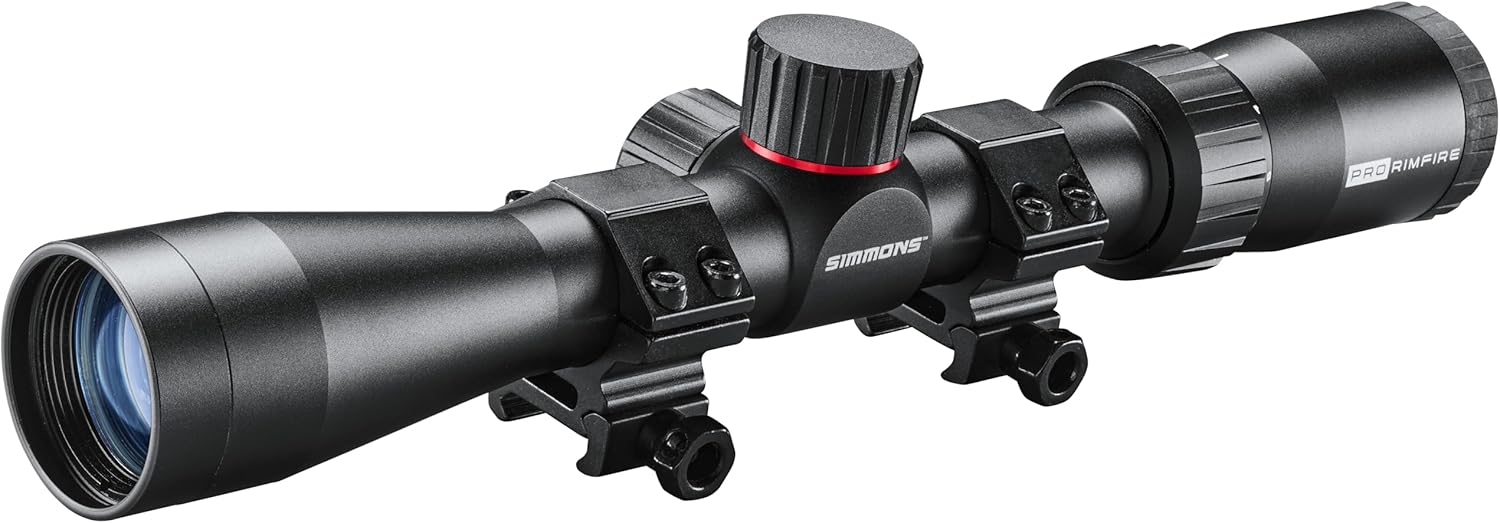
Don't let the name fool you; while designed for rimfires, the Simmons .22 Mag 3-9x32 is perfectly capable of handling the low recoil of an Inland M1 Carbine. Its biggest selling point is its slim profile. A 32mm objective lens looks much more "at home" on the slender M1 Carbine than a bulky 40mm or 50mm lens, keeping the rifle's iconic silhouette intact.
- Magnification: 3-9x
- Objective Lens: 32mm
- Eye Relief: 3.75 inches
- Tube Diameter: 1 inch
- Weight: 10.0 oz
- Reticle: Truplex
Pros:
* Slim, attractive design that matches the M1 Carbine's scale.
* "SureGrip" rubber surfaces on adjustments for easy use with gloves.
* Very affordable.
Cons:
* Lower light transmission compared to Bushnell or Leupold.
* Included rings are for 3/8" dovetails (won't fit most M1 mounts).
Glass Clarity & Reticle
The glass is surprisingly good for the price, utilizing high-quality optical glass and fully coated lenses. It isn't a "night vision" wonder, but for daytime range use, it’s sharp and bright. The Truplex reticle is a standard crosshair that is thin enough not to obscure small targets.
Eye Relief & Eye Box
At 3.75 inches, the eye relief is very comfortable for receiver-mounted use. The eye box is generous at lower magnifications, though like most budget 3-9x scopes, it gets a bit tighter as you approach the 9x ceiling.
Durability
Simmons uses a "HydroShield" lens coating to help shed water. While it isn't as rugged as a military-spec Trijicon, it is plenty durable for range bags and casual hunting. It has held up to thousands of rounds of .22 Magnum (which has a sharp "crack" recoil), making it safe for .30 Carbine use.
Elevation & Windage Knobs
The turrets feature Simmons' patented TrueZero adjustment system, which uses a simplified internal construction to ensure the zero stays put. The clicks are quiet but tactile.
Magnification & Parallax
3-9x magnification is plenty for the Carbine. One thing to note: because it is a "rimfire" scope, the parallax is often set at 50 yards rather than 100. This is actually a benefit for many M1 Carbine shooters who spend most of their time at 50-yard indoor or outdoor ranges.
Mounting & Accessories
It comes with 3/8" dovetail rings which are useless for most M1 Carbine mounts. You will need to purchase a separate set of 1-inch Picatinny or Weaver rings. The slim 32mm body allows for very low mounting.
My Personal Experience
I put this on a "shooter" grade Inland that had a pitted barrel. It helped me wring out 3-inch groups at 100 yards, which was a significant improvement over the iron sights. It feels very natural on the rifle and doesn't snag on clothing as much as larger scopes.
Online Customer Comments
Reviewers on Cabela’s and MidwayUSA often mention that this is the best "cheap" scope that doesn't feel cheap. Many people buy them for their kids' first rifles, but end up keeping them because they perform so reliably.
Verdict
The best compact, low-profile option for shooters who want magnification without the bulk.
➡️➡️➡️ Explore User Feedback and Current Pricing on Amazon
How to Choose the Right Scope for This Pistol (Inland M1 Carbine)
Selecting the best scope for Inland M1 Carbine requires understanding the unique mechanical limitations and ballistic performance of this platform. The M1 Carbine is not a long-range sniper rifle; it is a light, fast-handling carbine with an effective range of roughly 150 to 200 yards. Therefore, putting a massive 24x magnification scope on it is counterproductive.
Mounting Method: Scout vs. Receiver
The most important decision is how you will mount the scope.
1. Forward (Scout) Mount: Using a rail like the UltiMAK replaces the wooden handguard. This allows the scope to sit far forward. You must use a Long Eye Relief (LER) or "Scout" scope for this. This method keeps the receiver clear for easy loading/unloading and avoids interference with the top-ejecting brass.
2. Receiver Mount: These attach to the rear sight dovetail or the side of the receiver. These use standard eye-relief scopes. While this feels more traditional, you must ensure the scope is mounted high enough or far enough back that it doesn't get hit by spent shells.
Weight and Balance
The Inland M1 Carbine weighs only about 5.2 pounds. If you add a 20-ounce scope, you increase the rifle's weight by nearly 25%, which can ruin the very "handiness" that makes the M1 famous. Look for optics under 12 ounces to maintain that classic feel.
Reticle and Magnification
A simple Duplex or "Plex" reticle is usually best. Complex BDC (Bullet Drop Compensator) reticles are rarely calibrated for the .30 Carbine’s unique ballistics. As for magnification, a range of 1-4x or 2-7x is ideal. Anything more is usually overkill for the mechanical accuracy of the rifle and the cartridge.
FAQs
1. Can I use a standard rifle scope on a forward mount?
No. Standard scopes have about 3-4 inches of eye relief. If you mount them forward on the handguard, you will only see a tiny "pinhole" of an image. You must use a "Scout" or "LER" (Long Eye Relief) scope for forward mounting.
2. Will a scope interfere with the ejection of my Inland M1 Carbine?
It can. The M1 Carbine ejects shells upward and slightly to the right. If a scope is mounted directly over the bolt, shells may hit the scope body, causing jams. This is why many owners prefer the forward "Scout" mount or specialized side-mounts.
3. Is the .30 Carbine recoil enough to break a cheap scope?
The recoil is mild, but the action is "snappy." The sudden forward-and-back motion of the heavy bolt can vibrate internal components. While most modern scopes can handle it, very low-end "no-name" airsoft scopes will likely lose zero quickly.
4. Do I need to remove my rear iron sights to mount a scope?
On most receiver-style mounts, yes, you must remove the rear flip or ramp sight to install the mount. However, forward "Scout" mounts allow you to keep your iron sights as a backup (co-witnessing is usually not possible, but the irons remain on the gun).
5. What is the best magnification for 100-yard target shooting with an M1?
Most shooters find that 4x magnification is the perfect balance. It provides enough detail to see a 1-inch bullseye clearly without the "image shake" associated with higher magnifications.
Conclusion
The Inland M1 Carbine is a piece of American history that still serves as an excellent defensive and sporting tool today. Enhancing it with the best scope for Inland M1 Carbine—whether it’s the rugged Burris Scout for a modern tactical feel or the elegant Leupold VX-Freedom for traditional hunting—simply unlocks the rifle's inherent potential. By carefully considering your mounting preference and weight requirements, you can ensure that your M1 remains the fast, accurate, and reliable carbine it was always meant to be. Happy shooting!