Choosing the best scope for second focal plane applications remains a top priority for hunters and target shooters who value a consistent reticle size across all magnification levels. Unlike First Focal Plane (FFP) optics where the reticle grows and shrinks, a Second Focal Plane (SFP) scope keeps the crosshairs fine and easy to see even at the lowest power, making it ideal for low-light hunting and traditional long-range shooting. In this guide, I will draw upon my years of field testing to break down the top-performing SFP optics available in 2026, evaluating their clarity, mechanical reliability, and overall value. Whether you are mounting an optic on a rimfire rifle for backyard plinking or a magnum bolt-action for mountain hunting, finding the right best scope for second focal plane configuration is essential for precision and speed.
Top Product List: Best Scope for Second Focal Plane
- Vortex Optics Viper HS LR Second Focal Plane Riflescopes – Best Overall for Long-Range Hunting
- Leupold VX-Freedom 3-9x40 – Best Lightweight Traditional Hunting Scope
- Athlon Optics Neos 6-18x44 Second Focal Plane Riflescopes – Best Budget-Friendly Precision Optic
- Burris Fullfield II Hunting Scope – Best Classic Reliability and Durability
- Vortex Optics Venom 1-6x24 Second Focal Plane Riflescope – Best SFP LPVO for Rapid Engagement
- Arken Optics LH-6 1-6x24 Second Focal Plane LPVO – Best Value for Tactical Versatility
Vortex Optics Viper HS LR Second Focal Plane Riflescopes

The Vortex Viper HS LR (Long Range) is a specialized SFP optic designed to bridge the gap between traditional hunting and precision shooting. By utilizing a second focal plane reticle, it ensures that your aiming point remains highly visible at 4x power while providing an extra-low dispersion lens system for high-resolution imaging at 16x.
Product Specs
* Magnification: 4-16x
* Objective Lens: 50mm
* Tube Size: 30mm
* Reticle: Dead-Hold BDC (SFP)
* Adjustment Click Value: 1/2 MOA (Elevation) / 1/4 MOA (Windage)
* Weight: 21.4 oz
Pros and Cons
* Pros: Exceptional edge-to-edge clarity; specialized CRS Zero Stop system; rugged 30mm main tube.
* Cons: Elevation clicks are 1/2 MOA which may be too coarse for some; slightly heavy for ultra-light builds.
Glass Clarity & Reticle
The glass quality on the Viper HS LR is impressive, featuring XD (extra-low dispersion) elements that significantly increase resolution and color fidelity. During my testing, the image remained crisp even at the maximum 16x magnification with very little blurring at the edges. The Dead-Hold BDC reticle is located in the second focal plane, meaning the hash marks are only accurate for holdovers at the highest magnification, but it provides an incredibly clean sight picture for quick shots at lower power.
Eye Relief & Eye Box
Vortex designed this scope with a forgiving 4-inch eye relief, which is vital when mounting it on high-recoil rifles like a .300 Win Mag. The eye box is generous at the lower end of the magnification range, allowing for rapid target acquisition. Even at 16x, I found it relatively easy to maintain a full field of view without excessive "shadowing" around the edges.
Durability
Constructed from a single block of aircraft-grade aluminum, the 30mm tube is O-ring sealed and argon purged. I’ve used this optic in freezing rain and humid morning mist without any internal fogging. The ArmorTek coating on the exterior lenses does a fantastic job of protecting against scratches and oil from fingerprints.
Elevation & Windage Knobs
The elevation turret is an exposed target-style knob, while the windage is capped to prevent accidental shifts in the field. The clicks are tactile and audible, though the 1/2 MOA increments on elevation are a specific choice for "Long Range" hunters who want to dial quickly. The CRS Zero Stop is a mechanical lifesaver, allowing you to return to zero instantly after dialing for a long shot.
Magnification & Parallax
The 4-16x range is highly versatile for North American hunting. It features a side parallax adjustment knob that is smooth to operate and effectively removes parallax error from 50 yards to infinity. This is a massive upgrade over fixed-parallax scopes when trying to squeeze out extra precision at distance.
Mounting & Accessories
Being a 30mm tube, it requires standard 30mm rings. I mounted mine using Vortex PMR rings on a Tikka T3x. It comes with protective lens caps and a sunshade, which is a nice touch for shooting in the late afternoon when glare becomes an issue.
My Personal Experience
I took this scope out to a local range and zeroed it on a .308 bolt-action. It took exactly four rounds to achieve a dead-center zero at 100 yards. I then performed a "Box Test," dialing up 10 MOA, right 10, down 10, and left 10. The scope tracked perfectly, returning exactly to the original point of aim. The SFP reticle was a joy to use in the shaded parts of the range where a thin FFP reticle might have disappeared.
Online Customer Comments
Most users on Reddit’s r/longrange praise the Viper HS LR for its "set it and forget it" reliability. One user noted, "For the price, the glass rivals scopes costing twice as much, though I wish the windage turret was also exposed."
Verdict
An elite choice for hunters who need to dial for distance but prefer the consistent visibility of an SFP reticle.
➡️➡️➡️ Explore User Feedback and Current Pricing on Amazon
Leupold VX-Freedom 3-9x40

The Leupold VX-Freedom 3-9x40 represents the gold standard for American-made hunting optics. It is designed to provide professional-grade performance in a lightweight, no-nonsense package that focuses on "The Twilight Light Management System," which is a fancy way of saying it performs exceptionally well when the sun starts to go down.
Product Specs
* Magnification: 3-9x
* Objective Lens: 40mm
* Tube Size: 1-inch
* Reticle: Hunt-Plex (SFP)
* Adjustment Click Value: 1/4 MOA
* Weight: 12.2 oz
Pros and Cons
* Pros: Extremely lightweight; legendary Leupold lifetime warranty; superior low-light performance.
* Cons: 1-inch tube offers less adjustment range than 30mm; no side parallax adjustment.
Glass Clarity & Reticle
Leupold’s glass is famously clear. The VX-Freedom uses lead-free, military-standard scratch-resistant lenses. The clarity is edge-to-edge with almost zero chromatic aberration. The Hunt-Plex reticle is a clean, simplified duplex design that doesn't clutter your view, which I find much faster for target acquisition in dense timber.
Eye Relief & Eye Box
This scope offers roughly 3.7 to 4.2 inches of eye relief. Leupold is known for having one of the most forgiving eye boxes in the industry. You don’t have to have your head perfectly aligned to get a clear shot, which is a massive advantage when you’re shooting from an awkward position in a tree stand.
Durability
Like all Leupold scopes, the VX-Freedom is "Punisher" tested, meaning it is subjected to recoil forces that would destroy lesser optics. It is fully waterproof and fogproof. I have dropped a rifle with this scope mounted directly onto a rocky trail, and it held its zero without a single hiccup.
Elevation & Windage Knobs
The turrets are capped and low-profile. The adjustments are 1/4 MOA per click. While they aren't as "clicky" or tactile as a high-end tactical scope, they are positive and repeatable. This is not a scope designed for constant dialing; it’s a "zero and hunt" optic.
Magnification & Parallax
The 3-9x magnification is the most popular range in hunting history for a reason. It is fixed parallax at 150 yards, which is standard for hunting scopes. For shots under 400 yards, you will likely never notice the lack of a parallax knob.
Mounting & Accessories
It uses 1-inch rings, making it compatible with a vast array of affordable mounting solutions. It is a very compact scope, leaving plenty of room on the rail for bolt handle clearance.
My Personal Experience
I used the VX-Freedom during a late-season deer hunt. The sun was dipping below the ridge, and the shadows were getting deep. Through the scope, the deer was perfectly visible and the Hunt-Plex reticle stood out sharply against its hide. It’s a simple tool that does its job perfectly without unnecessary features.
Online Customer Comments
On hunting forums, the consensus is that this is the best "bang for buck" scope for a traditional rifle. One reviewer mentioned, "It’s so light I barely feel it on my mountain rifle, yet the glass is better than my old VX-2."
Verdict
The ultimate best scope for second focal plane seekers who want simplicity, lightweight design, and elite low-light performance.
➡️➡️➡️ Explore User Feedback and Current Pricing on Amazon
Athlon Optics Neos 6-18x44 Second Focal Plane Riflescopes

Athlon has made a name for itself by packing high-end features into budget-friendly optics. The Neos 6-18x44 is an SFP scope that targets the target shooter and small-game hunter who needs high magnification without a four-digit price tag.
Product Specs
* Magnification: 6-18x
* Objective Lens: 44mm
* Tube Size: 1-inch
* Reticle: BDC 600 IR (Illuminated)
* Adjustment Click Value: 1/4 MOA
* Weight: 18.3 oz
Pros and Cons
* Pros: Illuminated reticle at a low price point; side parallax adjustment; high 18x magnification.
* Cons: Glass gets slightly "milky" at full 18x; eye relief is a bit shorter than Leupold.
Glass Clarity & Reticle
For a budget scope, the glass is surprisingly decent. It uses fully multi-coated lenses to improve light transmission. The BDC 600 reticle is etched into the glass, which is a durability feature usually reserved for more expensive models. The center illumination is a great touch for shooting at dark targets or during dusk.
Eye Relief & Eye Box
The eye relief is about 3 inches. It is a bit tighter than the more expensive Vortex or Leupold options, meaning you need to be a bit more consistent with your cheek weld. However, at the mid-range magnifications (10x-12x), it is very comfortable to use.
Durability
The Neos is nitrogen-purged and waterproof. It’s built on a one-piece aluminum tube. While I wouldn't take it into a combat zone, it has survived several trips to the range on a .223 bolt action and a .22 LR precision rifle without any internal issues.
Elevation & Windage Knobs
The turrets are capped, but they offer a tool-less reset to zero feature, which is rare at this price point. The clicks are audible but have a slightly "mushy" feel compared to the Vortex Viper. Still, for occasional adjustments, they work perfectly fine.
Magnification & Parallax
One of the standout features is the side parallax knob. It adjusts down to 10 yards, making this an incredible option for rimfire shooters or airgunners who need to shoot at very close distances. The 18x top end provides plenty of zoom for checking your hits on paper at 100 yards.
Mounting & Accessories
It fits 1-inch rings. The package is standard, but the build quality feels more substantial than other "Amazon-brand" scopes.
My Personal Experience
I mounted the Neos on a Ruger Precision Rimfire. The ability to dial the parallax down to 10 yards allowed me to shoot tiny groups at 25 yards and then quickly transition to 100 yards. For a scope under $200, the illumination was surprisingly crisp with very little "bleed" inside the tube.
Online Customer Comments
Reddit users often recommend the Neos for entry-level long-range rimfire. One user stated, "The parallax adjustment is the star here; it makes it way better than the Crossfire II for close-range target work."
Verdict
The best scope for second focal plane for those on a tight budget who need side parallax and high magnification.
➡️➡️➡️ Explore User Feedback and Current Pricing on Amazon
Burris Fullfield II Hunting Scope

The Burris Fullfield II is a legendary optic that has remained largely unchanged for years because it simply works. It is built for the hunter who wants a rugged, dependable SFP scope with a proven track record of holding zero under harsh conditions.
Product Specs
* Magnification: 3-9x
* Objective Lens: 40mm
* Tube Size: 1-inch
* Reticle: Ballistic Plex (SFP)
* Adjustment Click Value: 1/4 MOA
* Weight: 13 oz
Pros and Cons
* Pros: Extremely durable; very simple to use; excellent value.
* Cons: The entire eyepiece rotates when changing magnification (can't use flip-up caps easily); older design.
Glass Clarity & Reticle
The glass is clear and bright, utilizing Burris’s Hi-Lume multi-coating. It does a great job of reducing glare. The Ballistic Plex reticle is one of the most copied designs in the world because it is so intuitive—simple hash marks for 200, 300, 400, and 500-yard holdovers that actually align well with most standard hunting calibers.
Eye Relief & Eye Box
You get about 3.1 to 3.8 inches of eye relief. While not as long as the Leupold, it’s adequate for most standard calibers. The eye box is stable, and I didn't find myself "hunting" for the image during rapid mounting drills.
Durability
The Fullfield II is famous for its durability. It uses a double internal spring-tension system to lock the internal components in place. I’ve known hunters who have kept this scope on their primary rifle for over a decade without ever needing to re-zero.
Elevation & Windage Knobs
These are steel-on-steel adjustments for maximum repeatability. They are capped and require a coin or a flathead to turn, which is fine for a set-it-and-forget-it hunting scope. The reliability of these internals is much higher than many modern, "fancy" looking turrets.
Magnification & Parallax
The 3-9x range is perfect for everything from woods hunting to open plains. It is a fixed parallax scope, set at 100 yards. This keeps the exterior of the scope clean and reduces the number of moving parts that could potentially fail.
Mounting & Accessories
It uses 1-inch rings. One quirk is that the entire rear ocular housing turns when you change magnification. This means if you use a flip-up lens cap, it will rotate with the zoom, which can be annoying. Most users stick to the "bikini" style covers it comes with.
My Personal Experience
I’ve used the Fullfield II on several "loaner" rifles because I know it won't break. On a trip to the Pacific Northwest, it was subjected to constant rain and being banged against the side of a UTV. The zero never shifted, and the glass didn't fog. It is the definition of a "workhorse."
Online Customer Comments
Reviews on Amazon and optics forums frequently mention that this scope "punches way above its weight class." One long-time owner wrote, "I've had mine for 15 years on a .30-06. It’s never failed me."
Verdict
A timeless, rugged choice for anyone who values durability over modern bells and whistles.
➡️➡️➡️ Explore User Feedback and Current Pricing on Amazon
Vortex Optics Venom 1-6x24 Second Focal Plane Riflescope
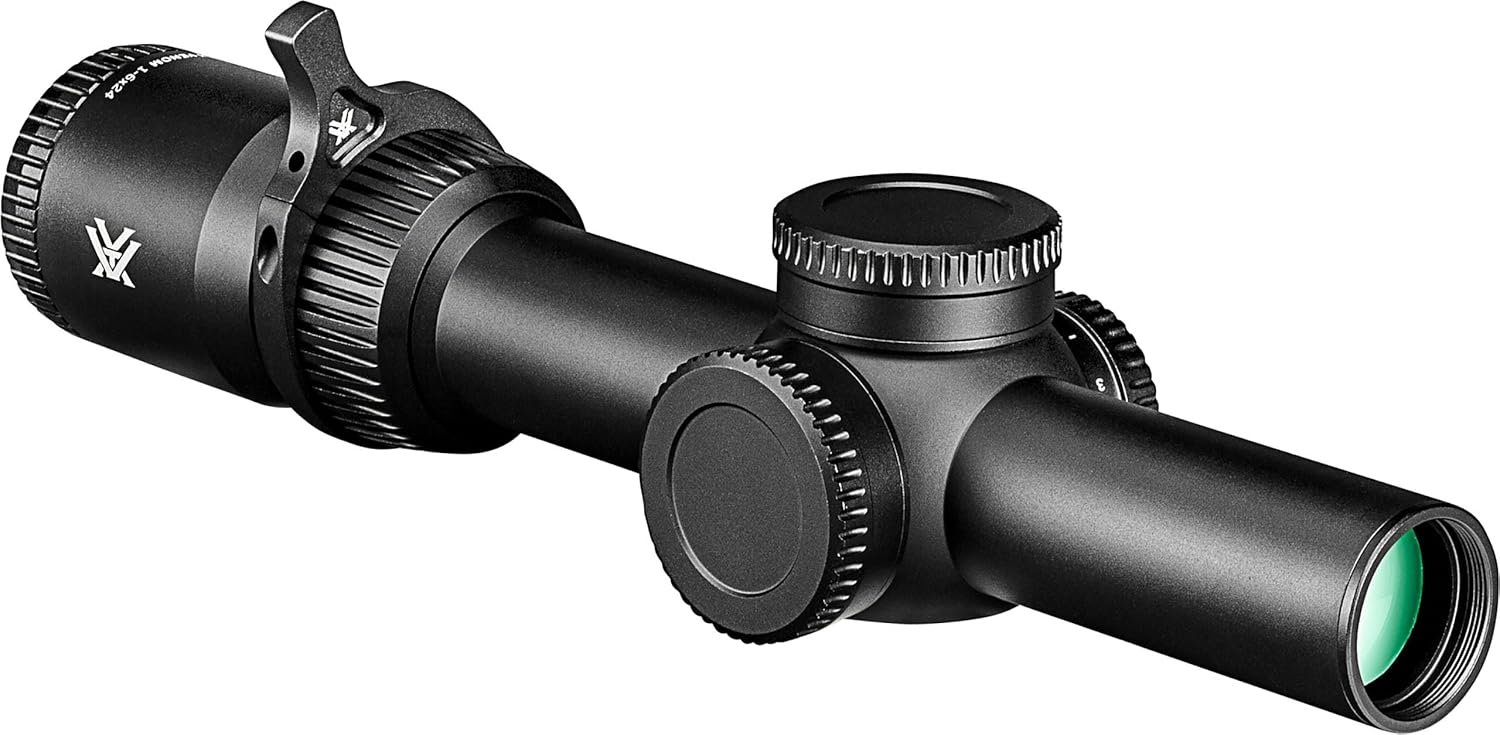
The Vortex Venom 1-6x24 is a modern LPVO (Low Power Variable Optic) that brings SFP advantages to the tactical and competition world. By keeping the reticle at a constant size, it allows the user to use the optic like a red dot at 1x magnification while still having 6x power for mid-range shots.
Product Specs
* Magnification: 1-6x
* Objective Lens: 24mm
* Tube Size: 30mm
* Reticle: AR-BDC3 (SFP)
* Adjustment Click Value: 1/4 MOA
* Weight: 19.5 oz
Pros and Cons
* Pros: True 1x magnification; illuminated "daylight bright" reticle; included throw lever.
* Cons: Heavier than a red dot; SFP means BDC is only accurate at 6x.
Glass Clarity & Reticle
The glass is surprisingly good for the Venom line, sitting just below the Viper series. It’s clear and offers a wide field of view. The AR-BDC3 reticle features a center "horseshoe" that acts like a large red dot at 1x, which is perfect for close-quarters engagement. At 6x, you can use the fine drops for targets out to 600 yards.
Eye Relief & Eye Box
At 1x, the eye box is massive. You can shoot with both eyes open, much like you would with a holographic sight. As you crank it up to 6x, the eye relief tightens to about 3.6 inches, but it remains one of the most usable LPVOs in its price range.
Durability
The 30mm tube is rugged and shockproof. It’s water and fogproof as well. Vortex includes a throw lever in the box, which is a huge plus, as it allows you to rip through the magnification range in a split second during a competition.
Elevation & Windage Knobs
The turrets are capped and low-profile. The adjustments are consistent and firm. Since this is an SFP LPVO, most users will zero at 50 or 100 yards and then use the reticle for holdovers rather than dialing.
Magnification & Parallax
This is a fixed parallax optic set at 100 yards. For a 1-6x scope, this is standard. The "True 1x" is actually very close to 1.0, with minimal fish-eye distortion at the edges, which is impressive for an entry-level LPVO.
Mounting & Accessories
It requires a 30mm mount. I recommend a cantilever mount if you are putting this on an AR-15 to get the proper eye relief. The included sunshade and throw lever add about $50 of value to the package.
My Personal Experience
I ran this scope through a series of "up drills" on an AR-15. At 1x, it was nearly as fast as my dedicated red dot. When I transitioned to a 300-yard steel gong, I flipped the throw lever to 6x, used the first BDC hash mark, and rang the steel consistently. The illumination is truly bright enough for a sunny day.
Online Customer Comments
Reviewers on YouTube and Reddit often compare this favorably to the Strike Eagle, noting that the glass clarity seems a step up. "The included throw lever is a game changer for 3-gun matches," one user noted.
Verdict
The best scope for second focal plane for AR platform users who want speed and versatility.
➡️➡️➡️ Explore User Feedback and Current Pricing on Amazon
Arken Optics LH-6 1-6x24 Second Focal Plane LPVO
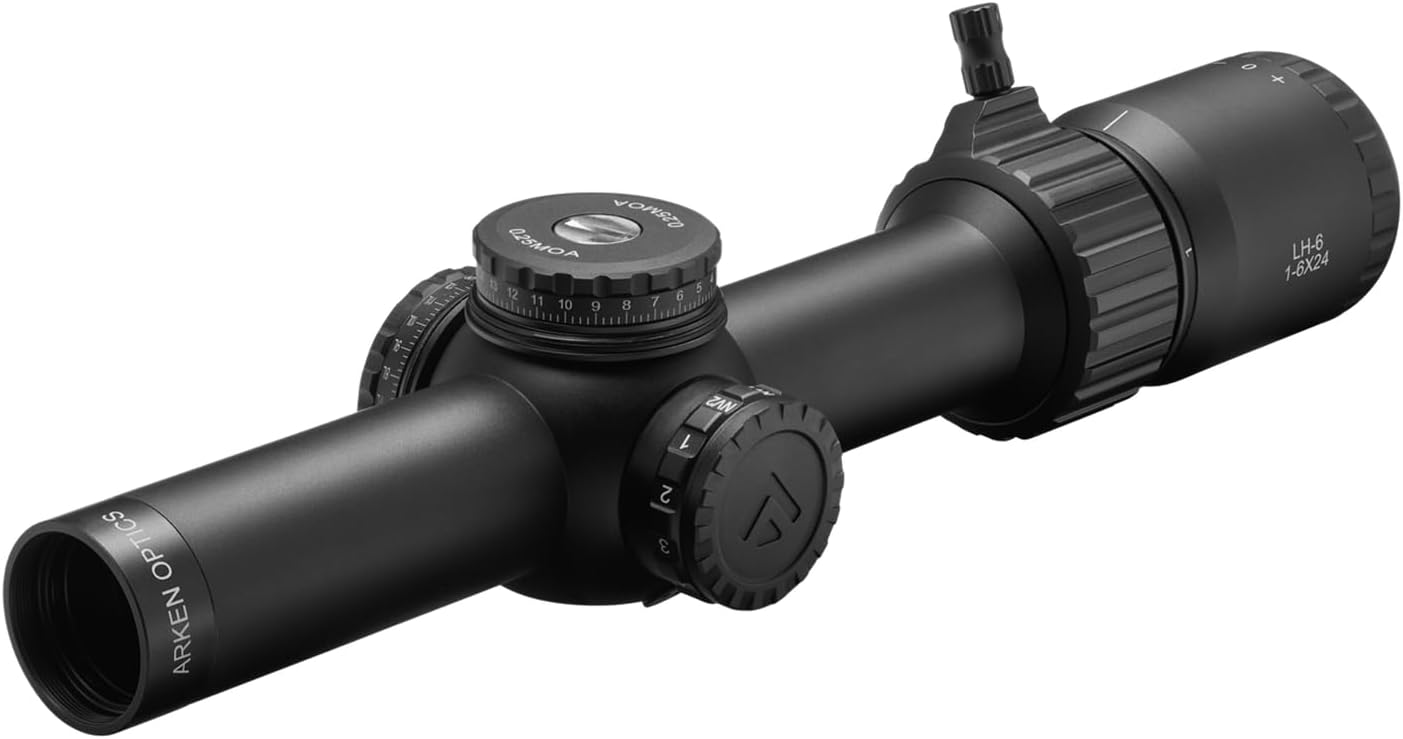
Arken has disrupted the market with their high-end turrets and glass. The LH-6 (Lightweight Hunting/Hybrid) is their take on a high-quality SFP LPVO. It is designed for those who want Arken's mechanical precision in a more compact, second focal plane format.
Product Specs
* Magnification: 1-6x
* Objective Lens: 24mm
* Tube Size: 30mm
* Reticle: KL5 (SFP)
* Adjustment Click Value: 1/4 MOA
* Weight: 19.2 oz
Pros and Cons
* Pros: Incredible turret feel; high-definition glass; very competitive pricing.
* Cons: Brand is newer than Leupold or Vortex; illumination could be slightly brighter.
Glass Clarity & Reticle
Arken uses high-definition glass that punches way above its price point. The LH-6 is remarkably clear with very little distortion. The KL5 reticle is a smart SFP design that provides a clear center dot for fast shooting and a detailed lower section for holdovers when you are zoomed in.
Eye Relief & Eye Box
Eye relief is generous at 3.5 inches. The eye box is very forgiving at 1x, making it a great candidate for a "do-it-all" carbine. I found it very easy to stay on target while moving, which is a testament to the optical design.
Durability
Arken is known for "over-building" their scopes. The LH-6 feels incredibly dense and solid. It is waterproof, fogproof, and shockproof. The finish is a nice matte black that resists scratches well.
Elevation & Windage Knobs
This is where Arken shines. Even though it's an LPVO, the turrets have a distinct, metallic "clink" that feels like a $1,000 precision scope. They are capped, but once you remove the caps, the adjustments are remarkably precise.
Magnification & Parallax
The 1-6x zoom is smooth. Like most LPVOs, it is fixed parallax at 100 yards. It handles the transition from 1x to 6x without needing to refocus the diopter, which is a sign of good internal lens alignment.
Mounting & Accessories
It uses 30mm rings. Arken often sells high-quality mounts alongside their scopes, and I highly recommend using theirs as they are precision-machined to match the scope's quality.
My Personal Experience
Testing the LH-6 was a surprise. I expected good turrets, but the glass clarity was the real winner. I set it up on a .223 wylde build and was able to shoot 1 MOA groups at 100 yards with ease. The SFP reticle stayed thin enough at 6x that it didn't obscure the target, which is the main reason I prefer SFP for mid-range precision.
Online Customer Comments
The Arken community is very vocal. Most users on forums like Snipers Hide are impressed with how the LH-6 holds up against more expensive brands. One user mentioned, "Arken’s turrets are ruined for me—now everything else feels like mush."
Verdict
A top-tier choice for shooters who want the best mechanical feel and glass quality in a mid-priced SFP optic.
➡️➡️➡️ Explore User Feedback and Current Pricing on Amazon
How to Choose the Right Scope for This Pistol
When selecting the best scope for second focal plane use on a pistol or a short-barreled rifle (SBR), the criteria shift significantly from traditional long-range rifle shooting. Pistol scopes, or "Extended Eye Relief" (EER) scopes, are a unique category. First and foremost, you must consider the eye relief. Since a pistol is held at arm's length, you need a scope with 12 to 20 inches of eye relief. Standard rifle scopes (like most on this list) will not work on a traditional handgun held at extension because you will only see a tiny "black hole" in the lens.
Secondly, weight and balance are critical. A pistol is inherently less stable than a rifle braced against the shoulder. Adding a 20-ounce tactical scope can make a handgun incredibly front-heavy, leading to faster muscle fatigue and larger groups. Look for compact, lightweight models that don't exceed 10-12 ounces. For a "hunting pistol" like a Thompson Center Contender or a Ruger Super Redhawk, an SFP scope is ideal because the reticle stays thick and visible against the brush, regardless of whether you are at 2x or 7x power.
Lastly, you must consider the recoil. Large-caliber pistols (like .44 Magnum or .454 Casull) produce a violent, "snappy" recoil that can literally shake the internal lenses of a cheap scope loose. You need an optic with a proven heavy-recoil rating. SFP scopes are often more robust in this regard because the reticle assembly is located at the rear of the scope, where it is slightly better protected from the initial shockwave of the shot. Stick with brands like Leupold, Burris, or Vortex that offer a lifetime warranty, as pistol optics live a very hard life.
FAQs
1. What is the main benefit of a Second Focal Plane (SFP) scope?
The main benefit is that the reticle stays the same size regardless of your magnification setting. This ensures the crosshairs remain thin and precise at high power but thick and easy to see at low power for fast, close-range shots.
2. Is an SFP scope better than FFP for hunting?
Many hunters prefer SFP because, at low magnification (which is common in thick brush), an FFP reticle can become so small it is nearly invisible. An SFP reticle stays bold and easy to find against a dark animal.
3. Do the BDC marks work at all magnifications on an SFP scope?
No. On a Second Focal Plane scope, the holdover points (BDC marks) are only accurate at one specific magnification, usually the highest setting. You must check your manual to confirm the "calibration power."
4. Can I use a Second Focal Plane scope for long-range shooting?
Yes, but it requires more care. You must ensure you are at the correct magnification if you are using the reticle to hold for wind or elevation. Many long-range shooters solve this by dialing their elevation with the turrets instead of holding over.
5. Why are SFP scopes generally cheaper than FFP scopes?
SFP optics are mechanically simpler to manufacture. The reticle is placed at the rear of the magnification lenses, which requires less precision in the zooming mechanism to keep the reticle centered and clear.
Conclusion
Finding the best scope for second focal plane performance comes down to balancing your specific needs for glass clarity, weight, and mechanical reliability. If you are a dedicated hunter, the Leupold VX-Freedom or the Burris Fullfield II offer timeless reliability. For those looking for a modern, tactical approach, the Vortex Venom LPVO or the Arken LH-6 provide incredible features for the money. Regardless of your choice, the SFP design remains a superior option for those who prioritize a consistent, visible reticle across all shooting conditions. Choose the optic that fits your platform, and you’ll find that the simplicity of the second focal plane is often the key to success in the field.